
Zero-API Is a Diagnostic Choice, Not an Ideology
When the first goal is to diagnose where forecast, billing, or reconciliation is breaking, live API access is often unnecessary. In many cases it is actually less useful than a point-in-time export because the API reflects the system as it looks now, not the state the team was operating from when the forecast was submitted or the quarter closed.
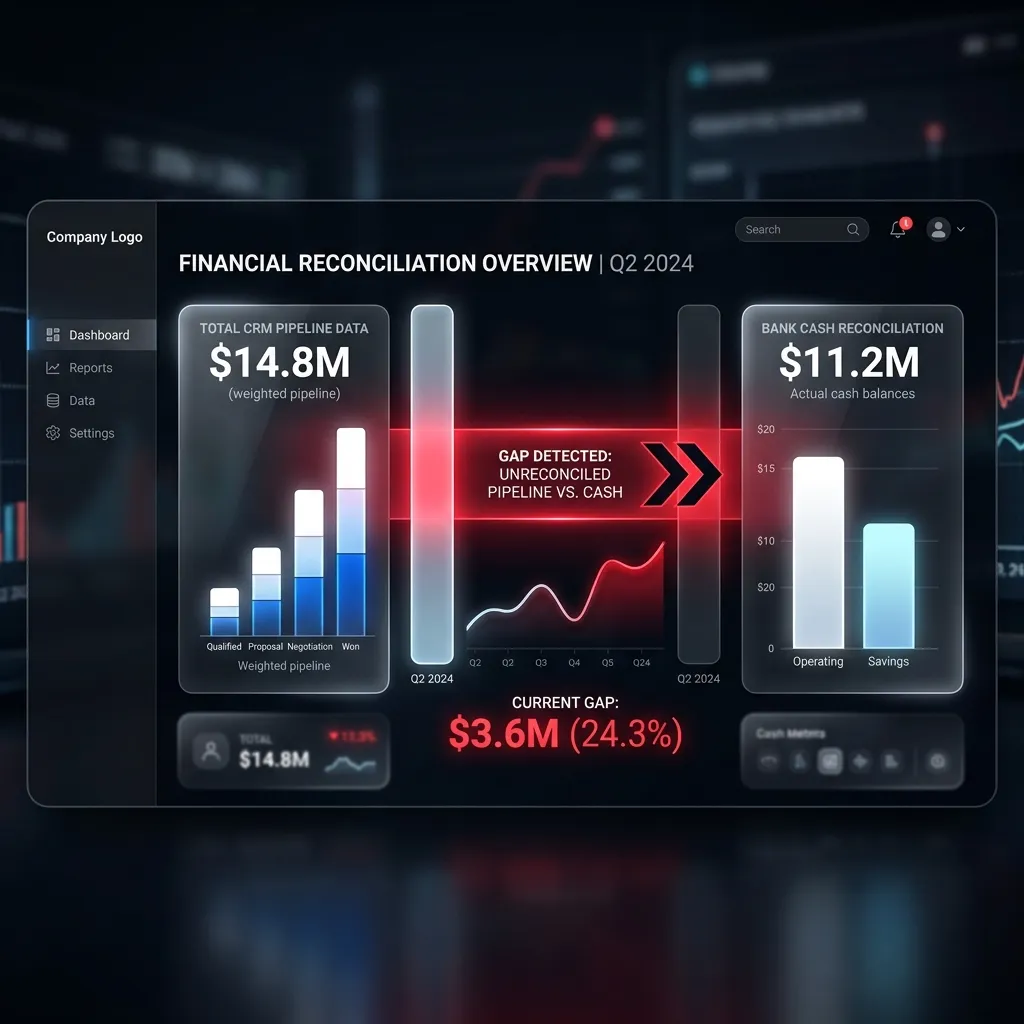
A CSV snapshot freezes the operating record. That matters when you are trying to answer questions like: what did the CRM say on the date of the forecast review, what had billing started by then, and what cash had actually been collected? Forensics depend on preserved state, not just current state. That same preserved-state discipline is what makes a CRM-to-bank reconciliation review work without live API access.
Why Snapshot Data Is Often Better for Forensic Review
There are three practical reasons a CSV-based diagnostic is often the right first move.
- Point-in-time integrity. The snapshot preserves the exact records under review before later syncs or user edits change them.
- Access control. You can scope the review to the fields and cohorts required without widening permissions across live systems.
- Faster start. The team can begin with the exports it already has instead of waiting on security, procurement, or integration work.
That does not mean APIs are bad. It means permanent integration is a second decision. First you need to know what problem you are solving.
Where a Zero-API Audit Is Most Useful
Zero-API audits are strongest when the company needs a fast, low-risk diagnostic of forecast integrity, CRM-to-billing mismatch, or board-reporting drift. They are especially useful when the business is already concerned about diligence, least-privilege access, or unnecessary vendor sprawl.
- Forecast reviews: compare forecast submissions to the CRM and billing state from that same period.
- Leakage reviews: trace booked deals, invoicing, credits, and collections without adding new system connections. This is also the fastest way to run a revenue leakage diagnosis before involving additional vendors.
- Diligence prep: review data quality and reporting logic before exposing more systems to more parties. Companies preparing for PE due diligence benefit from establishing a clean point-in-time record before the operating partner requests it.
The common thread is that the company needs a clearer view of the truth before it decides whether a deeper integration is warranted.
Security and Access Discipline Matter
The value of a zero-API audit is not just technical convenience. It is access discipline. If a team can diagnose the issue from scoped exports, there is no reason to introduce broad connector permissions on day one. That matters for privacy, for internal controls, and for the basic principle of limiting who can touch live systems.
This is particularly relevant in companies preparing for financing, diligence, or a more formal operating cadence. The more parties involved, the more important it becomes to keep the first review narrow, explainable, and reversible.
What Happens After the Snapshot Review
A zero-API diagnostic is the first layer, not the last. Once the snapshot review shows where the reporting logic breaks, the company can decide what deserves a tighter control: a recurring CSV-based control pack, a targeted reconciliation rhythm, or a deeper systems integration. The point is that the integration decision comes after the diagnostic, not before it.
That is where MxM Revenue Engineering's sequence matters. The Scorecard identifies where the number is unsupported. Controls Install fixes the review logic and exception handling around the records that matter. Governance decides which controls stay manual, which stay export-based, and which justify deeper systems work. Zero-API is not the whole operating model. It is the fastest low-risk way to establish the truth before widening access.